Best B2B Lead Generation Funnel for More Qualified Leads
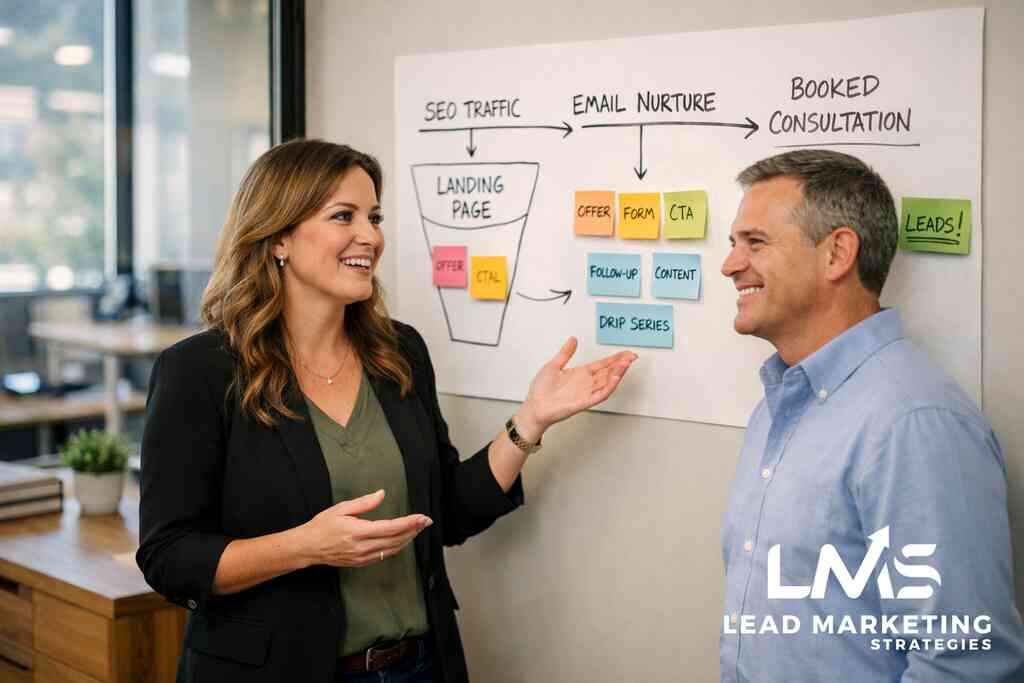
Best B2B Lead Generation Funnel for More Qualified Leads
A strong B2B lead generation funnel helps turn traffic into qualified conversations. It does more than collect names. It guides buyers from first interest to sales-ready action in a way that feels useful, relevant, and low-pressure.
If traffic is growing but leads are not, the problem is usually not volume. The real issue is often the funnel itself. Many B2B teams attract visitors, but they do not build enough trust, context, or intent before asking for a meeting.
Why traffic alone does not create pipeline
B2B buyers rarely convert on the first visit. They research quietly, compare options, and return multiple times before reaching out. That means a website visit is only a signal, not proof of intent.
A weak funnel treats every visitor the same. A stronger one recognizes that different buyers need different levels of education and reassurance before they are ready to talk.
Common reasons B2B funnels fail include:
- The message is too broad
- The landing page asks for too much too soon
- Marketing and sales define leads differently
- There is no follow-up sequence after a form fill
- Content does not match the buyer’s stage in the journey
The best B2B lead generation funnel structure
The most effective funnel for B2B marketing usually has four parts:
1. Awareness
This is where buyers first discover your brand. They may arrive through search, paid media, referrals, or social content. At this stage, they are often identifying a problem rather than choosing a vendor.
Helpful content here includes:
- Educational articles
- Industry guides
- Problem-focused landing pages
- Simple explanation pages
The goal is not to close a sale immediately. The goal is to create clarity and earn attention.
2. Consideration
Once a buyer understands the problem, they start comparing solutions. This is where your funnel should show relevance and proof.
Useful assets at this stage include:
- Case studies
- Comparison pages
- Webinars
- Service breakdowns
- Targeted email nurture content
The message should answer practical questions. Why does your approach work? What outcomes can buyers expect? How do you reduce risk?
3. Conversion
This is where the buyer takes a clear action, such as requesting a consultation, asking for pricing, or scheduling a demo.
To support conversion, your pages should:
- Keep one clear offer per page
- Use short and simple forms when possible
- Remove distractions
- Reinforce trust with proof points and clear next steps
A strong conversion page does not overwhelm the visitor. It helps them feel confident enough to act.
4. Sales qualification and follow-up
Many funnels stop too early. They capture a lead but fail to qualify or nurture it well. That creates frustration for sales and weakens pipeline quality.
A better process uses:
- Lead scoring based on behavior and fit
- Clear definitions for marketing-qualified and sales-qualified leads
- Timely follow-up based on intent signals
- Automated nurture for leads that are not ready yet
This stage is where a lot of revenue is won or lost. Speed matters, but so does relevance.
What makes a funnel work in B2B marketing
The best B2B lead generation funnel is built around buyer behavior, not assumptions. It responds to what people actually do on your site.
Look for intent signals such as:
- Repeat visits to service pages
- Time spent on pricing or solution pages
- Downloads of high-value content
- Branded search activity
- Multiple visits from the same company
These actions often mean the buyer is moving closer to a decision. They are more useful than raw traffic numbers.
The role of account-based marketing
Account-based marketing can make a funnel much stronger because it focuses attention on the right companies and decision-makers. Instead of trying to reach everyone, you tailor the message for specific accounts, industries, or roles.
This approach works well when:
- The sales cycle is longer
- Deals are high value
- Multiple stakeholders influence the decision
- The market is narrow or competitive
In practice, account-based marketing combines content, advertising, and sales outreach so the buyer sees a consistent message across touchpoints.
How lead capture should support the funnel
Lead capture is important, but it should never interrupt trust-building. The form should match the value of the offer and the stage of the buyer.
A simple rule works well:
- Use shorter forms for early-stage content
- Use more detailed forms for high-intent offers
- Ask only for information you will actually use
If you ask for too much too soon, conversion drops. If you ask for too little at the wrong time, sales lacks context. Balance is key.
Why lead magnets are helpful but not enough
Lead magnets still have a place in B2B marketing. They can attract attention and create an easy first step. But by themselves, they rarely create a complete funnel.
To move a prospect forward, the funnel should also include:
- Strong landing page messaging
- Follow-up emails
- Retargeting or remarketing where appropriate
- Sales alignment
- Content that addresses objections
A lead magnet opens the door. It does not finish the conversation.
How to improve an existing funnel
If your current funnel is not producing qualified leads, start by reviewing the path from first visit to sales handoff.
Ask these questions:
- Is the message specific to a real buyer problem?
- Are visitors being asked to convert too early?
- Do forms match the value of the offer?
- Is there a nurture sequence after the initial conversion?
- Are marketing and sales using the same lead definition?
Small changes in these areas can improve lead quality quickly.
Final thoughts
The best B2B lead generation funnel is not the one that gets the most clicks. It is the one that consistently turns the right visitors into qualified opportunities.
That usually means combining buyer intent signals, useful content, clear landing pages, smart lead capture, and disciplined follow-up. When those pieces work together, the funnel becomes less about chasing leads and more about creating a buying process that feels natural.
For B2B teams, that is often the difference between busy marketing activity and real pipeline growth.
What Is the Best Lead Generation Funnel for B2B Marketing


Comments
Post a Comment