Small Business Marketing Strategy Guide for 2026
Small Business Marketing Strategy Guide for 2026
A strong marketing strategy for small business growth in 2026 is not about doing more. It is about doing the right things in the right order. If traffic is up but leads are flat, the issue is usually not effort. It is alignment.
This guide breaks down how to build a practical strategy that supports visibility, lead generation, and better conversions.
Start with strategy, not tactics
Many small businesses jump straight into posting on social media, running ads, or sending emails. Those tactics can help, but only when they are connected to a clear plan.
A real strategy answers a few basic questions:
- Who is the ideal customer?
- What problem are you solving?
- Why should someone choose your business now?
- How will people find you?
- What happens after they show interest?
Without those answers, marketing becomes scattered. You may get clicks or views, but not steady results.
Define your customer clearly
The best marketing starts with knowing exactly who you want to reach. Not every visitor is a qualified lead. A good audience profile should include:
- Industry, location, or type of customer
- Main pain points or goals
- Budget and buying behavior
- Common objections
- Decision-making timeline
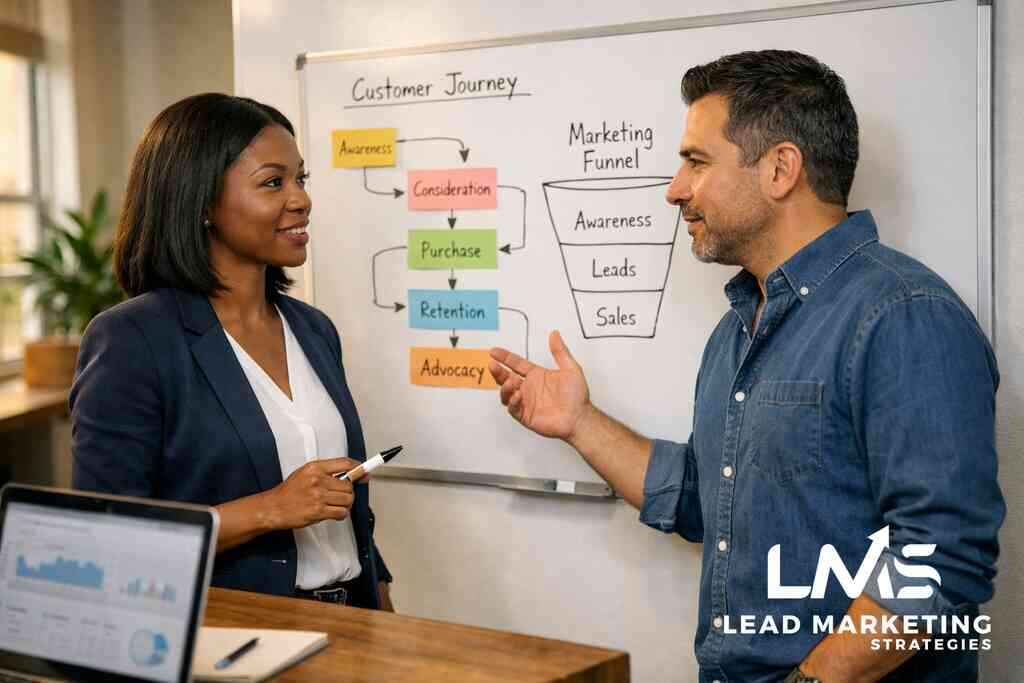
This is where customer journey mapping helps. It shows how people move from awareness to interest to action. Once you understand that path, it becomes much easier to build content, ads, and landing pages that match what they need at each stage.
Make sure your website does more than attract traffic
Website traffic alone does not grow a business. If visitors arrive and leave without taking action, the site is not doing its job.
Common conversion problems include:
- Weak or unclear calls to action
- Slow page speed
- Poor mobile layout
- Confusing navigation
- Offers that do not match search intent
Your website should support lead generation, not just look polished. In many cases, small changes to page structure, messaging, and forms can make a meaningful difference.
Build around the channels that fit your business
A smart small business marketing strategy usually combines several channels. The right mix depends on your audience, budget, and sales cycle.
Search engine optimization
SEO helps people find your business when they are actively searching for a solution. It works well for local visibility, service pages, and long-term growth. Strong SEO is built on useful content, technical health, and pages that answer real questions.
Local visibility
For businesses that serve a specific area, local search matters a lot. People often compare a few nearby options and act quickly. A strong local presence helps you show up when intent is high.
Paid advertising
PPC can deliver faster visibility, but only when it is managed carefully. Good campaigns use clear targeting, strong landing pages, and consistent tracking. Otherwise, ad spend can rise without producing enough quality leads.
Social media
Social media is useful for awareness, trust, and staying visible. It is usually not enough on its own, but it can support other channels by keeping your brand in front of the right audience.
Focus on conversion, not just exposure
A lot of small business marketing fails because it chases attention instead of action. Every campaign should move people toward a next step.
That next step might be:
- Filling out a form
- Calling your business
- Requesting a quote
- Booking an appointment
- Signing up for updates
To improve conversion, make the path simple. The message should be clear. The offer should be specific. The form should be short. The page should make it easy to understand what happens next.
Track what is working
You cannot improve what you do not measure. Marketing analytics and ROI tracking should be part of the strategy from the beginning.
At a minimum, pay attention to:
- Traffic by source
- Conversion rate
- Cost per lead
- Lead quality
- Pages that drive the most action
- Follow-up performance from sales or intake
These numbers show whether your strategy is helping the business grow or simply creating activity. The goal is not more data. The goal is better decisions.
Keep the plan realistic
A strong marketing strategy is practical. It matches your team, your market, and your budget. It does not try to do everything at once.
A simple, effective plan often includes:
- One clear ideal customer
- One primary offer
- A few high-value channels
- One main conversion goal
- A regular review process
That focus makes it easier to stay consistent. Consistency usually beats scattered effort.
Final thoughts
In 2026, small business marketing works best when it is built around clarity, not noise. Know your customer. Match your message to their needs. Make your website convert. Use the channels that fit your business. Then track the results and adjust.
If your current marketing feels busy but not productive, the answer is usually not more activity. It is a better strategy. With the right foundation, small businesses can create steady growth without wasting effort.
How to Create a Marketing Strategy for Small Business 2026


Comments
Post a Comment