Solar Marketing Strategies for High-Growth Development
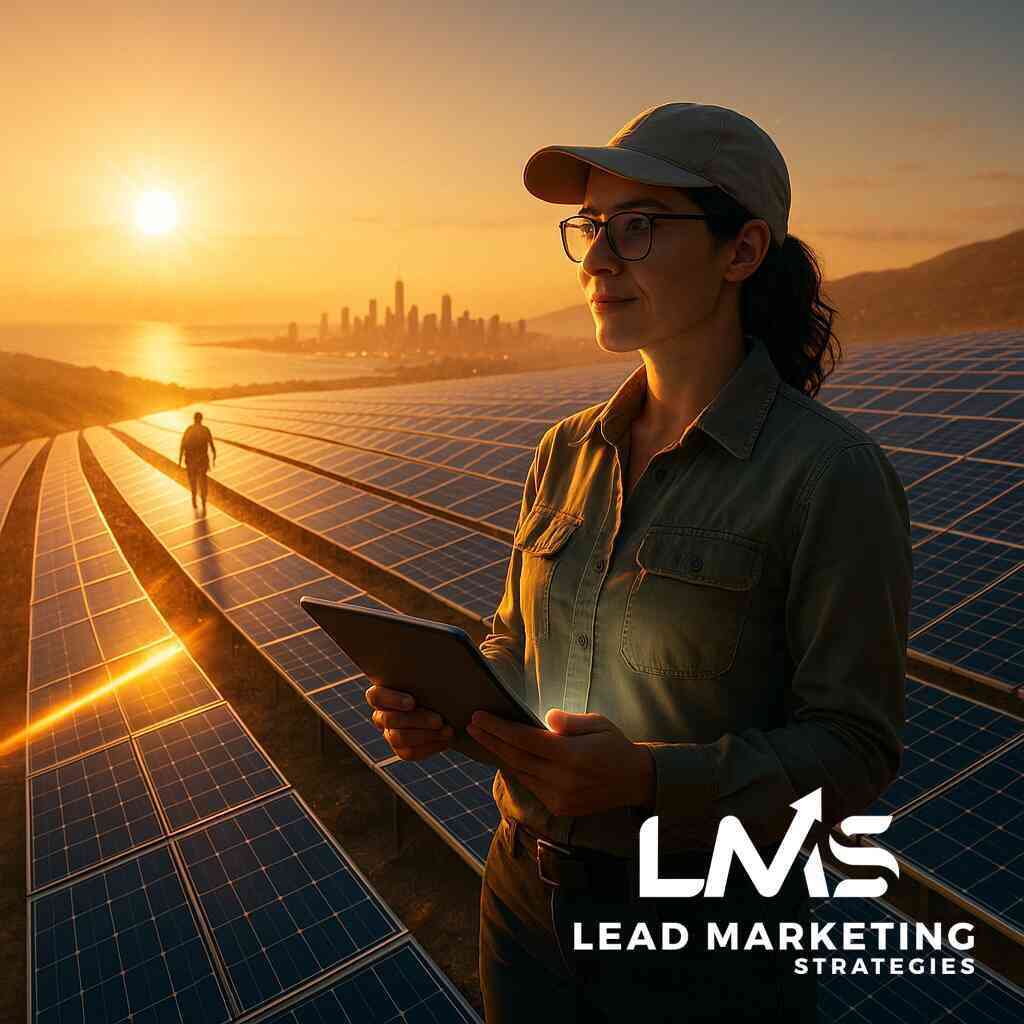
A Practical Guide to Solar Development and Marketing
Solar projects rarely succeed on engineering excellence alone. They need a steady flow of informed homeowners, facility managers, and investors who already trust the brand before the first panel is delivered. The sections below outline how modern solar marketing strategies shorten the sales cycle, increase close rates, and position a company as the local authority in clean energy.
1. Spark Interest Early With an Integrated Message
A clear value proposition—lower energy costs, energy independence, and measurable carbon savings—must appear consistently across all channels. When audiences encounter the same benefits in search results, social feeds, and email updates, confidence grows that the installer can actually deliver. Consider building a concise narrative around three pillars:
- Economic advantage – Transparent payback timelines and real client savings.
- Environmental impact – Quantified emission reductions and grid resilience.
- Community leadership – Local case studies, school partnerships, or job-creation statistics.
Tie every headline, infographic, and sales deck back to these themes. Consistency amplifies recall and sets the stage for a smoother hand-off from marketing to sales.
2. Align Branding With Buyer Values
Residential buyers often picture rooftop solar as a lifestyle upgrade. Commercial buyers, on the other hand, evaluate long-term operating costs and ESG commitments. Both audiences want proof, not promises.
- Visual identity – Choose colors and images that communicate progress and optimism, avoiding stock clichés. Aerial shots of actual installs work better than generic sunbursts.
- Tone – Speak plainly about incentives, finance terms, and performance guarantees. Buzzwords decrease trust.
- Local signals – References to neighborhood projects or regional legislation increase relevance and improve local search ranking.
When homeowners see familiar rooftops or recognizable landmarks in marketing materials, perceived risk drops and inquiries rise.
3. Map Detailed Buyer Personas
Effective campaigns begin with detailed persona documents. Go beyond basic demographics:
| Persona | Core Motivation | Common Objection | Content Angle |
|---|---|---|---|
| Eco-First Family | Climate action | Up-front cost | Emissions calculator, rebates explainer |
| Budget-Watcher | Bill savings | Roof condition | No-money-down options, warranty FAQ |
| Facilities Manager | Operational savings | Production risk | Degradation charts, uptime SLAs |
| CFO | ESG + ROI | Payback speed | Tax benefits, IRR model |
Each persona should have its own keyword list, preferred channels, and follow-up cadence. Drip emails for a CFO, for instance, should point to case studies with internal-rate-of-return tables, while emails to an Eco-First Family can highlight local CO₂ offsets.
4. Build a Cohesive Channel Mix
Search Engine Optimization (SEO)
- Optimize service pages for “solar installers near me” plus city names.
- Publish long-form explainers on net metering, battery incentives, and local permitting timelines.
- Use structured data markup so pricing tables and star ratings appear in search snippets.
Pay-Per-Click (PPC)
- Split campaigns by persona: residential, commercial, and community solar.
- Bid slightly higher on high-intent phrases such as “solar panel cost calculator” to capture buyers deeper in the journey.
- Send traffic to persona-specific landing pages with one clear next step.
Social Media and Content Marketing
- Short videos of time-lapse installations create shareable proof.
- Carousel posts showing utility bills before and after install resonate with cost-minded prospects.
- LinkedIn articles describing corporate PPAs attract sustainability officers and procurement teams.
Email Workflows
- Use three-part sequences: education, objection handling, and urgency (e.g., upcoming incentive deadlines).
- Trigger follow-ups when leads revisit pricing pages or calculators.
- Personalize subject lines with city names for local credibility.
5. Measure, Optimize, Repeat
Reliable data turns guesswork into strategy:
- Attribution dashboards reveal which search terms or ads generate qualified consultations.
- Heat maps on landing pages show where visitors pause, skim, or click away.
- Conversion-rate tests—changing a headline or call-to-action color—can uncover double-digit improvements.
Schedule monthly “growth sprints” where marketing and sales teams meet for one hour. Review lead quality, cost per acquisition, and common objections. Refine keyword lists, adjust bids, or rewrite email copy based on real feedback.
6. Leverage Specialized Agency Support
In-house teams handle strategic direction best; agencies excel at day-to-day channel execution and advanced tactics. Common value areas include:
- Deep keyword research and ongoing SEO maintenance.
- Graphic design for interactive calculators and dashboards.
- Media buying expertise to keep cost-per-click below industry averages.
- Neutral third-party perspective during A/B test debates.
Partnerships also provide backup when markets shift—such as policy changes, supply-chain delays, or seasonal demand spikes—allowing internal staff to focus on operations and customer satisfaction.
7. Put It All Together
A successful guide to solar development combines disciplined marketing with technical know-how:
- Craft a consistent narrative that stresses economic, environmental, and community benefits.
- Reflect buyer values through authentic branding and localized proof.
- Segment audiences into granular personas for precise messaging.
- Integrate SEO, PPC, social, and email within one data-driven framework.
- Review analytics weekly, acting fast on under-performing touchpoints.
- Tap specialized agencies when bandwidth or expertise gaps appear.
By following these practices, solar developers convert curiosity into confident commitments, shorten permitting queues, and turn completed installations into their next round of compelling proof. That virtuous cycle fuels sustainable growth throughout 2026 and beyond.
Guide to Solar Development with Solar Marketing Strategies


Comments
Post a Comment