Future-Proof Solar Lead Generation: AI, Intent Data, ROI
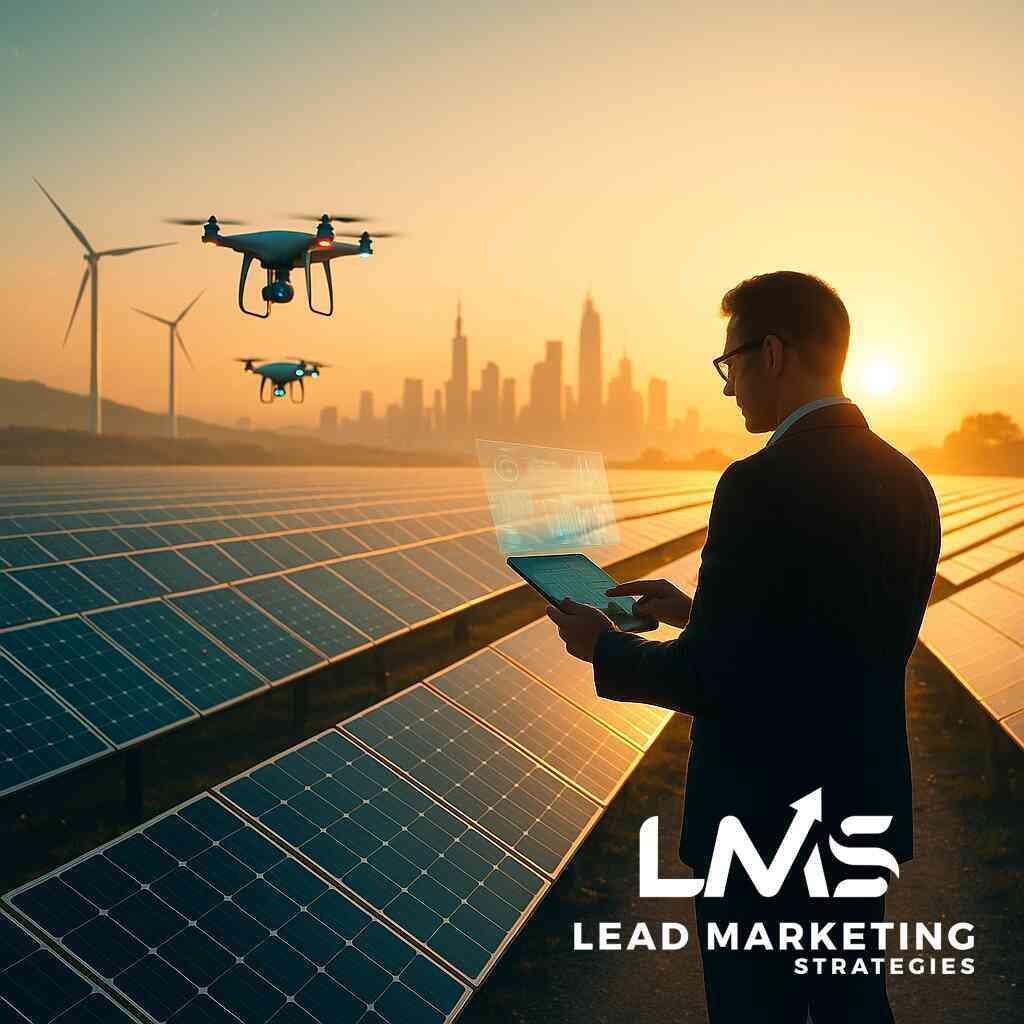
Why Solar Lead Generation Is Entering a New Era
The rapid growth of residential and commercial solar in 2025 has changed what counts as a qualified lead. Cold calls and postcard drops still exist, but the companies growing fastest now rely on data science, machine learning, and real-time market signals. This guide explains the core pillars of next-generation solar lead generation and shows how each piece fits into a coherent strategy.
1. Predictive Targeting Replaces Spray-and-Pray Lists
Traditional prospecting starts with a ZIP code list and ends with a tired script. Predictive targeting flips the process:
- High-resolution roof imagery, credit models, and local tariff data feed an AI score for every address.
- Leads above a preset threshold drop directly into the CRM, already ranked by likelihood to buy.
- Scores update automatically when a storm hits the grid, incentives change, or a homeowner starts searching for backup power.
The benefit is twofold: marketing dollars avoid low-probability homes, and sales teams focus on prospects that actually close.
2. Listening to Buyer Intent Across the Web
Homeowners reveal their intentions long before they fill out a form. Search queries like “best solar loan terms” or “net-zero renovation cost” are early signals. Social media comments on utility rate hikes are another. Modern intent platforms aggregate these breadcrumbs and map them to funnel stages:
- Awareness signals such as broad clean-energy questions trigger educational blog posts and infographics.
- Consideration signals like product comparisons prompt calculators and financing guides.
- Decision signals—for example, “Quote for 8 kW array in Phoenix”—route directly to appointment setters.
Matching content to intent shortens the buying journey while building trust.
3. Real-Time Market Dashboards Guide Every Channel
Quarterly research reports used to be enough. Not anymore. Cloud dashboards now merge demographic trends, incentive updates, and real-time web traffic so marketers can see demand shifts as they happen. Three practical uses:
- Territory expansion – Heat maps highlighting underserved neighborhoods with high irradiance and solid credit profiles.
- Budget allocation – If paid search cost per click spikes in one city, funds can instantly shift to social or programmatic in another.
- Content localization – When a new rebate launches, localized landing pages and email sequences go live the same day.
4. Micro-Segmentation for Hyper-Relevant Messaging
Solar buyers do not fit one profile. By layering census data, utility rates, and lifestyle indicators, marketers can split the audience into micro-segments such as:
- Climate-driven eco-advocates
- Budget-focused bill cutters
- Resilience seekers who fear grid outages
Copy, creative, and financing options then speak directly to each mindset. An eco-advocate receives carbon offset stats, while a resilience seeker sees a battery-backup case study. The message changes, the brand voice stays consistent.
5. Automation That Respects the Human Touch
AI handles heavy data lifting, but closing a deal still requires personal rapport. The most successful organizations automate only what adds value:
- Lead enrichment – Contact details, roof size, and utility rate are appended automatically so reps skip repetitive research.
- Cadence suggestions – The CRM nudges salespeople on optimal call times based on past response patterns.
- Content recommendations – Automated emails pull from a library of FAQs, warranties, and case studies tailored to each segment.
Reps spend less time shuffling paperwork and more time solving customer problems.
6. Continuous Feedback Loops Improve ROI
Every campaign, call, and site visit feeds new information back into the model. Closed-won deals refine the scoring algorithm, while lost opportunities reveal attributes to avoid. Over time the cost to acquire a customer drops, and forecast accuracy rises. The loop looks like this:
- Launch campaign → collect click, form, and call data.
- Update predictive model → adjust scores and creative.
- Reallocate budget → favor high-ROI channels.
- Repeat weekly.
7. Preparing for Community and Commercial Solar
Not every roof is install-ready, and many businesses now pursue aggressive sustainability targets. Future-proof lead strategies therefore include:
- Community solar outreach – Intent data flags renters and shaded-roof owners who still want clean power. Messaging focuses on subscription savings rather than panels.
- Commercial procurement monitoring – AI scans public RFP portals and supply-chain forums for phrases like “solar PPA” or “rooftop retrofit”, alerting the sales team in real time.
The same core technology—predictive scoring and intent listening—adapts easily to these segments.
Key Takeaways
- Data-driven scoring and real-time dashboards eliminate guesswork.
- Intent signals dictate both message and timing, improving conversion rates.
- Automation supports, rather than replaces, human sales expertise.
- A closed-loop system ensures every campaign funds the next round of optimization.
Adopting even one of these pillars can lift lead quality quickly. Combining all of them creates a responsive engine that scales with the accelerating demand for clean energy.
Looking Ahead
In the coming years the winners in solar will not be the companies that shout the loudest; they will be the ones that listen best, interpret fastest, and act with precision. Building that foundation now is the surest path to consistent, profitable growth in a competitive market.
What Is Solar Lead Generation's Ultimate Future Strategy


Comments
Post a Comment